Technology and physiotherapy.
Working towards your goals, together.
At THERA, we start by understanding your symptoms and the things you want to return to. We then consider which tools may belong in your care plan, alongside exercise, hands-on care and practical advice.
Assessment comes first
Chosen for your symptoms, clinical indications and personal goals.
Care alongside exercise
Equipment is one part of a care plan, not the whole answer.
Follow up and adapt
Reviewing your response so care continues to suit you.
Focused shockwave therapy
Focused shockwave delivers acoustic energy to a target area. A physiotherapist considers the location of symptoms, the tissue involved and your individual suitability before using it.

Its role in your care plan
It may be considered for certain tendon or fascia conditions. Suitability and outcomes differ by condition, and it is not needed for every type of pain.
During your session
The session begins with identifying the target area and explaining the process. Contact gel is applied, and settings are selected following assessment. Your comfort and response are monitored during treatment.
Connecting with rehabilitation
It is paired with suitable activity advice and exercise, helping connect the care plan to everyday activities.
Laser therapy
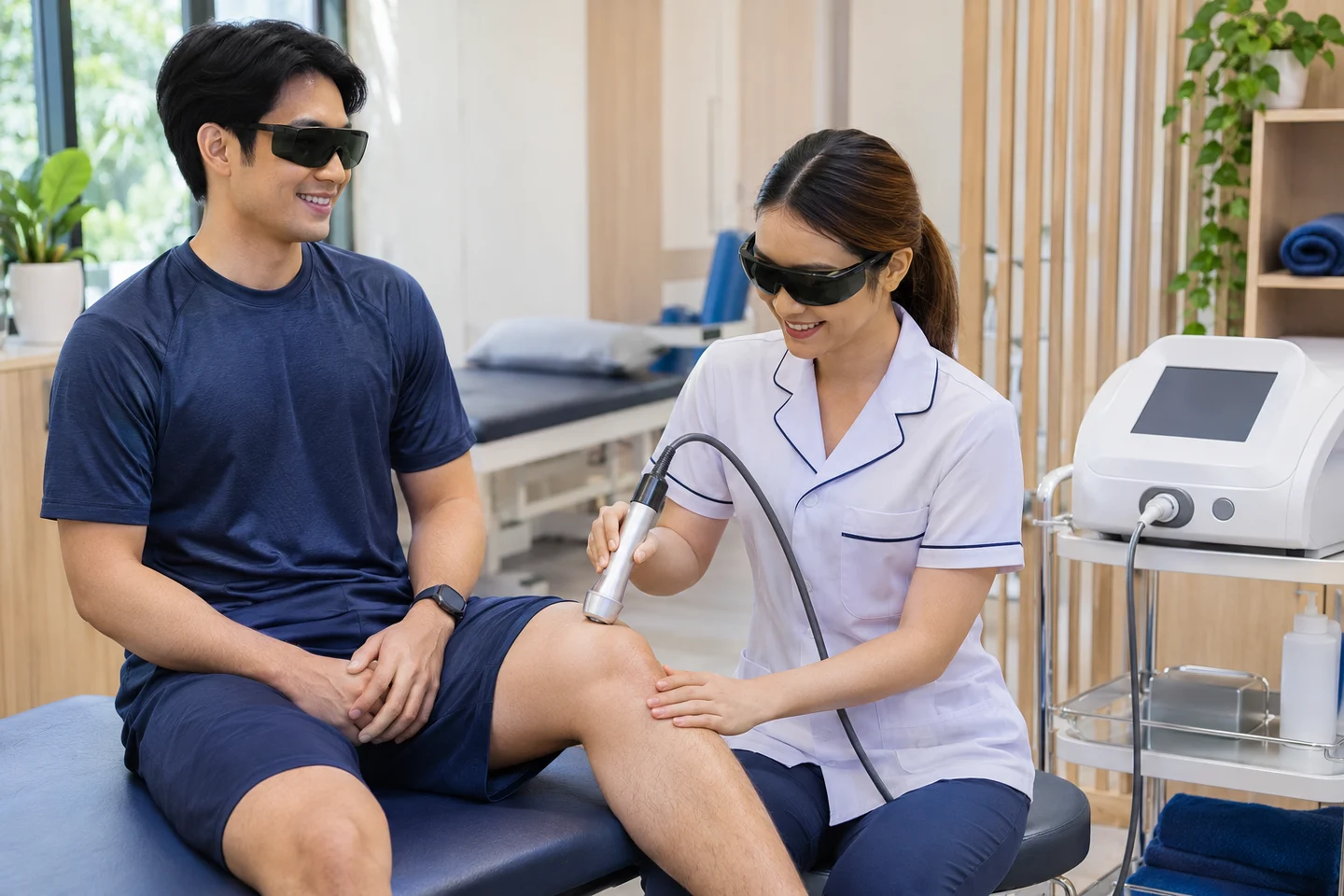
Physiotherapy laser uses light energy as an adjunct selected according to clinical indications, device type and assessment. It does not replace a complete rehabilitation plan.
Its role in your care plan
It may support symptom management in selected situations. Your team will explain the goals, limitations and expectations, without promising the same outcome for everyone.
During your session
The treatment area and health history are checked before starting. Both the patient and physiotherapist wear protective eyewear appropriate to the device, and comfort is monitored throughout.
Connecting with rehabilitation
It may be considered alongside movement exercises, hands-on care and activity adjustments within an individual plan.
Electrical stimulation
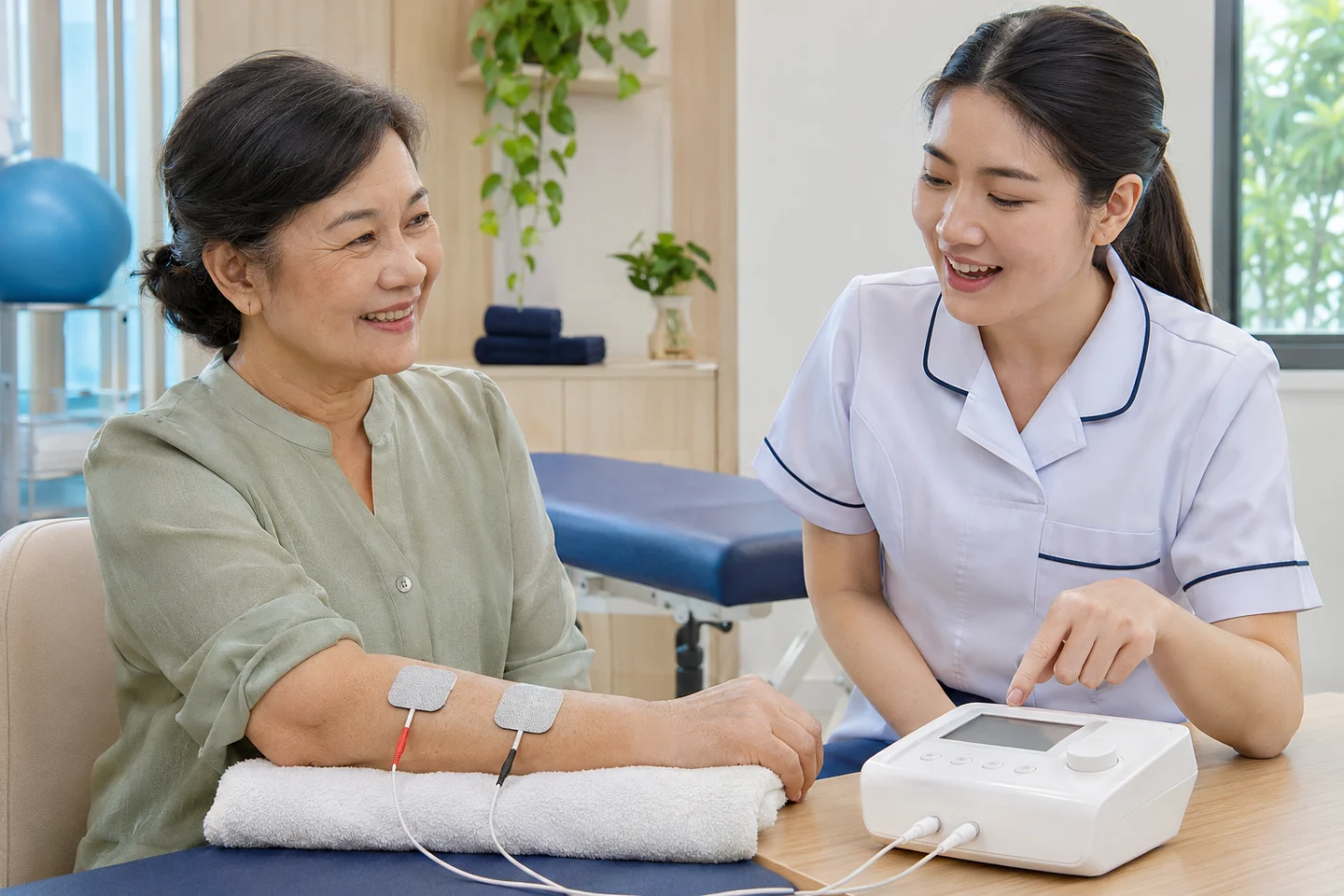
Electrical stimulation sends current through electrodes placed on the skin. Different forms serve different purposes, so the type, placement and settings must reflect the assessment.
Its role in your care plan
TENS may provide temporary pain relief for some people, while muscle stimulation has different goals. Your physiotherapist will explain why a particular option is being considered for you.
During your session
Skin condition, electrode placement and sensation are checked. The level is then gradually adjusted, with regular checks on how it feels.
Connecting with rehabilitation
It is used as an adjunct, while reviewing whether it supports participation in rehabilitation. The plan is reconsidered according to your actual response.
Therapeutic ultrasound
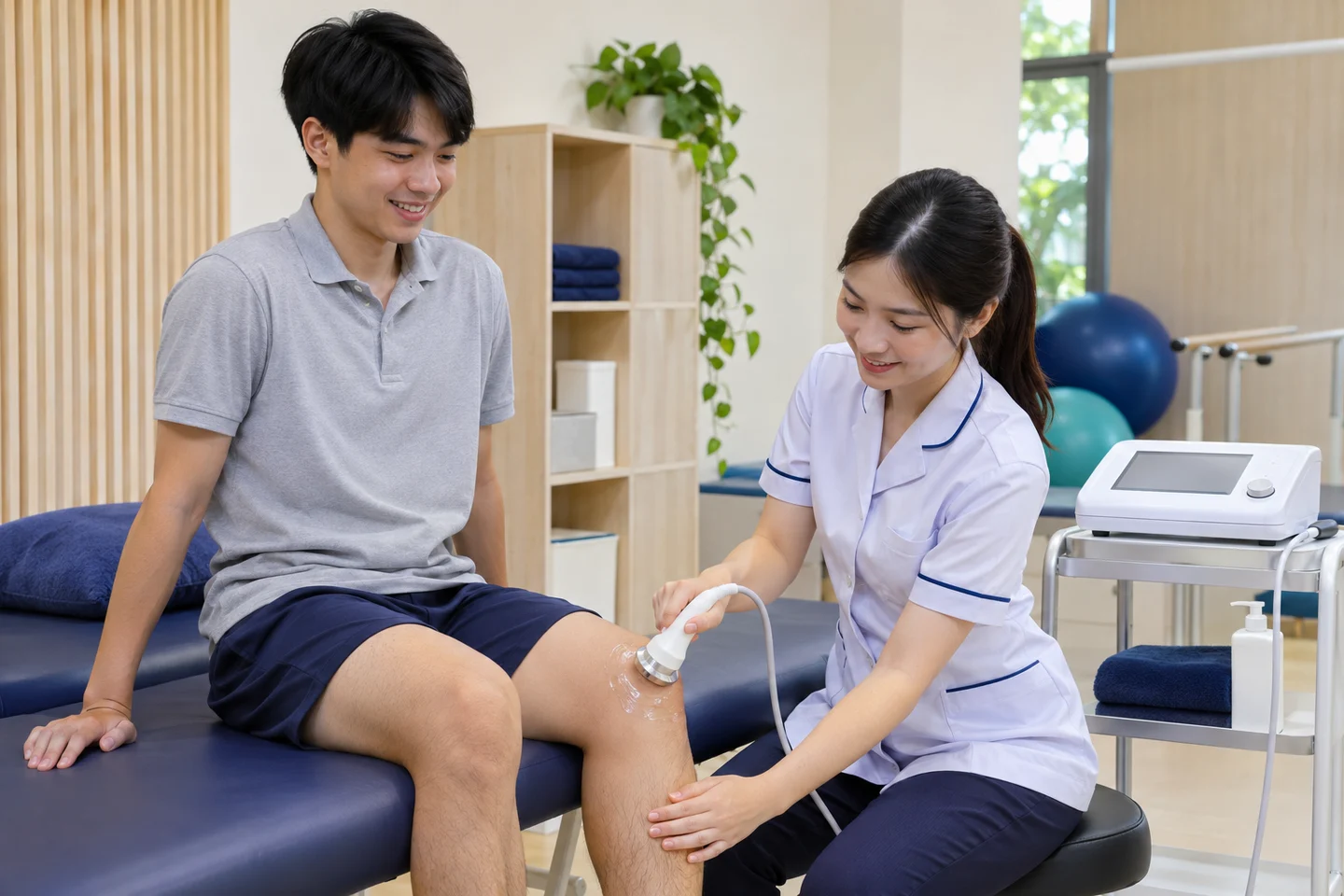
Therapeutic ultrasound delivers sound energy through a contact head and gel. It differs from diagnostic ultrasound imaging. Use should be based on appropriate clinical indications and treatment areas.
Its role in your care plan
It may be considered as an adjunct in selected care plans. Evidence of benefit varies by condition, so there should be a clear reason for choosing it.
During your session
The physiotherapist assesses the skin and target area before applying gel, then moves the treatment head appropriately while monitoring comfort.
Connecting with rehabilitation
Exercise and ongoing care remain central. Outcomes are reviewed and the plan is adjusted when an equipment-based approach does not meet your needs.
Movement that supports
the life you want to live
Care starts with assessment and shared goals. Suitable approaches are selected, then both symptoms and everyday function are reviewed. Not every device is needed at every visit, and results vary from person to person.